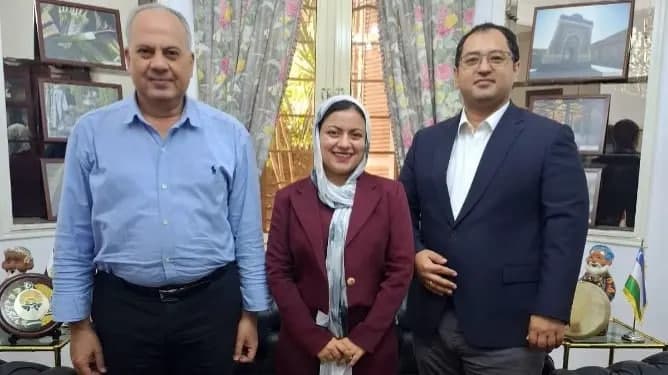

The plans were discussed at a meeting between Uzbek diplomats and Mohamed Farouk, regional director of the Egyptian pharmaceutical company, Dunyo reported.
The sides explored prospects for cooperation between PHARCO and Uzbekistan, including attracting investment, transferring technology and establishing local production of medicines used to treat hepatitis C.
PHARCO comprises nine organizations employing more than 5,700 people. Its products are exported to 57 countries, with annual sales exceeding 345 million packages. The company holds a 13.2% share of Egypt’s pharmaceutical market, making it the country’s largest pharmaceutical company by market share.
Farouk outlined PHARCO’s role in Egypt’s efforts to combat hepatitis C. The company developed affordable antiviral medicines, including the generic sofosbuvir drug Gratisovir and the licensed medicine Ravidasvir.
According to the report, the widespread availability of these medicines helped reduce the cost of a hepatitis C treatment course from tens of thousands of dollars to less than $100, while the reported cure rate reached 99%.
The large-scale distribution of the medicines through Egypt’s national hepatitis C program helped treat millions of people. Egypt subsequently became the first country to receive the World Health Organization’s “Gold Certification” for achieving hepatitis C elimination targets.
PHARCO already cooperates with several private pharmaceutical companies in Uzbekistan. A broader partnership involving Gratisovir and Ravidasvir could pave the way for direct supplies of the medicines, technology transfer and their local production at pharmaceutical facilities in Uzbekistan.
Following the meeting, the sides agreed to hold online negotiations involving Uzbekistan’s Agency for the Development of the Medical and Pharmaceutical Industry, Uzbek private pharmaceutical companies and PHARCO.
The Egyptian company also expressed its readiness to send a delegation to Uzbekistan for further talks.