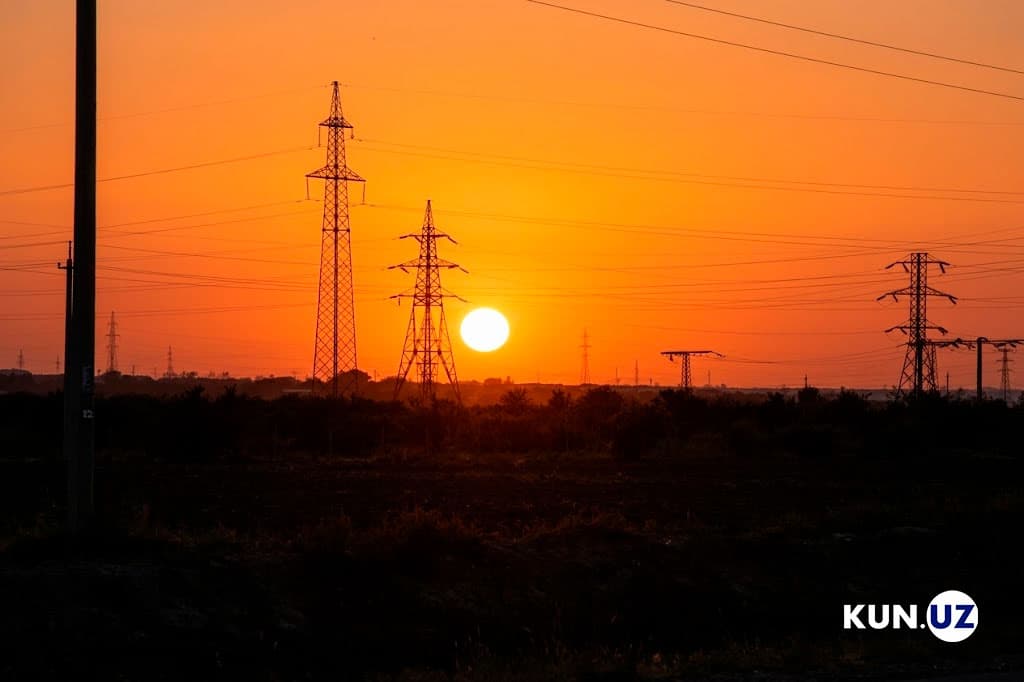

Uzbekistan experienced exceptionally hot weather in mid-July, with temperatures reaching record levels in several regions, according to Uzhydromet.
Air temperatures rose steadily throughout the month, with the peak of the heatwave occurring on July 18–19 across most of the country and on July 16–18 in the northwestern regions.
During those days, temperatures climbed to 43–45°C across much of Uzbekistan, while southern districts and desert areas recorded 46–49°C. The readings approached the highest temperatures ever recorded since meteorological observations began.
In Tashkent, the mercury reached 44.3°C on July 19, making it the hottest day of the current heatwave. The figure was just 0.3°C below the capital's all-time record of 44.6°C, set on July 18, 1997.
Regional capitals in the Fergana Valley also saw maximum temperature records broken repeatedly over several consecutive days.
New temperature records were registered at a number of meteorological stations, including Bukhara (46.9°C), Navoi (46.5°C), Arnasay (46.5°C), Shahrisabz (44.9°C), Dustlik (44.8°C), Namangan (44.2°C), Nurafshon (44.0°C), Fergana (43.9°C), Sariosiyo (43.8°C), Samarkand (43.6°C), Payshanba (43.5°C), Andijan (43.0°C), Pop (43.0°C) and Kuva (42.5°C).
Among the listed weather stations, the highest temperature was recorded in Bukhara, where the air warmed to 46.9°C.
According to Uzhydromet, the extreme heat was caused by a thermal depression. Under this weather pattern, a strong upper-level ridge formed over Iran, trapping an exceptionally hot air mass. As the ridge shifted northeastward, the dome of hot air gradually spread across the countries of Central Asia, triggering the prolonged period of extreme temperatures.